CD133-Guided RNA Nanoparticle Delivery of FTO siRNA Impairs Leukemia Resistance to Tyrosine Kinase Inhibitor Therapy
Original Research Article
DOI:
https://doi.org/10.59566/ISRNN.2025.0201EKeywords:
FTO, m6A, Leukemia, drug resistance, tyrosine kinase inhibitors, leukemia stem cell, RNA nanoparticles, CD133, colonies, spheroids, HeterogeneityAbstract
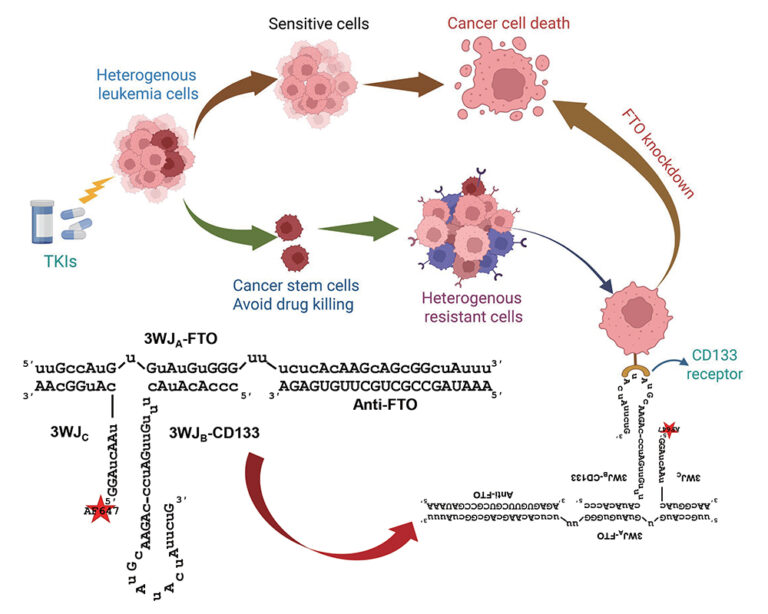
Despite the initial responses to the tyrosine kinase inhibitor (TKI) for cancer therapy, many patients often relapse with no curative regimens available. Further, the ability to target therapeutic agents to cancer cells with appropriate doses remains challenging in the clinic, especially for leukemia. Here, we show that naïve CML cells are dynamically heterogeneous in colony formation. Larger clones expand while smaller ones diminish and eventually disappear. Compared to resistant cells, parental populations, including CD44+ stem cells, form a greater number of larger, solid spheroids. Upregulation of fat mass and obesity associated protein (FTO), an RNA N6-methyladenosine demethylase, and stem cell markers (e.g., CD44, CD133, CD25) is more obvious in resistant cells compared to parental cells. FTO inhibitors (e.g., CS1, FB23-2) appreciably impair the growth of resistant cells either alone or in combination with nilotinib. FTO protein expression is unexpectedly upregulated by CS1 or FB23-2 treatment in multiple leukemia cell lines. We then constructed RNA nanoparticles encapsulating FTO siRNAs and conjugated with anti-CD133 RNA aptamers. We showed that, compared to negative control, these nanoparticles were taken up much more efficiently by resistant cells that highly express CD133. Treatment with the CD133-guided FTO siRNA nanoparticles efficiently silenced FTO expression in resistant cells, which leads to a significant reduction in their colony and spheroid formation. These findings offer new insights into cancer drug resistance and advance the application of RNA nanotechnology for treating leukemia. The research provides a foundation for developing novel, targeted therapies for resistant leukemia.