RNA Nanoparticles Harboring Radioisotopes or Other Imaging Molecules for Spontaneous Tumor Targeting for Early Cancer Diagnosis
Original Research Article
DOI:
https://doi.org/10.59566/ISRNN.2025.0201DKeywords:
RNA Nanotechnology, PET/CT Imaging, Cancer Diagnosis, Radio-labelling, Prostate CancerAbstract
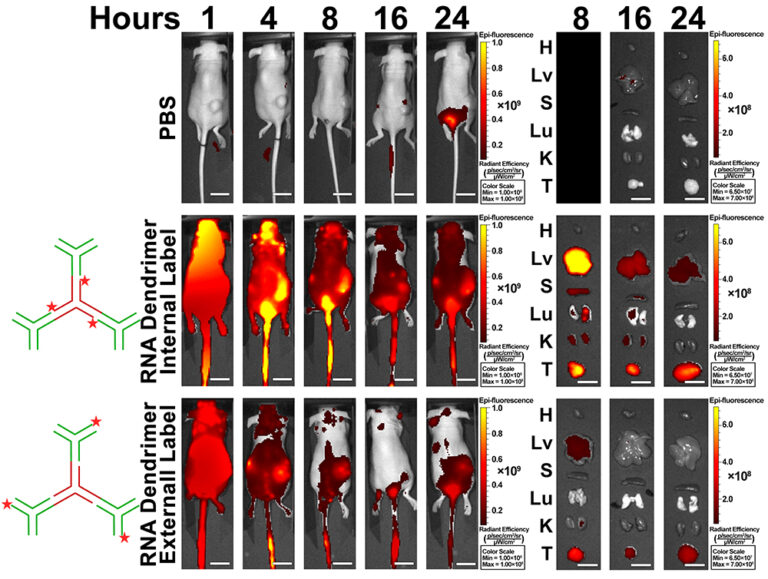
Cancer patients benefit from significantly higher survival rates if tumors are detected at early stages and prior to metastasis. Positron emission tomography (PET), computed tomography (CT), Single- Photon Emission Computed Tomography (SPECT), and other imaging techniques allow for noninvasive diagnosis of various tumors in relatively short periods. Targeted delivery of radiation is also an important approach in cancer therapy. Due to the dynamic nature of RNA, RNA nanoparticles demonstrate spontaneous tumor targeting, resulting in rapid accumulation in tumors without the use of targeting ligands. Incorporating tumor-targeting ligands on RNA nanoparticles generates enhanced tumor accumulation and targeting. Here a unique technology to specifically label three-way junction (3WJ) RNA nanoparticles is reported to carry radioisotopes or other imaging markers for cancer imaging. Two RNA nanoparticles were constructed to target prostate specific membrane antigen (PSMA) via a PSMA RNA aptamer or conjugated tert-Butyl-DCL (DCL). The spontaneous cancer homing of the RNA complex resulted in the detection of tumors with high sensitivity in mouse models, which can be applied to any cancer subtype at an early stage. Tumor accumulation occurred due to the motile and deformable nature of RNA nanoparticles, allowing for the high tumor accumulation of the imaging reagent via passing rapidly growing and leaky capillaries in the tumor vasculature. Furthermore, RNA nanoparticles conjugated with a NOTA radioisotope chelator were incubated with 68Ga in a pH- and temperature-controlled environment to prevent 68Ga non-specific interactions with the negatively charged phosphodiester backbone of RNA. The low pH during 68Ga3+ conjugation neutralized the negative charge of the phosphate backbone on the RNA, ensuring only specific radioisotope chelation to NOTA. To prove the concept of the proposed system, 68Ga-labeled 3WJ was tested in a prostate cancer animal model by PET/CT. The 68Ga-SF5 3WJ accumulated in and identified prostate cancer tumors with high sensitivity, resolution, specificity, and reliability. The proof-of-concept study reported in this paper is an important step in the direction of developing novel radiotherapeutic agents for various cancers. The radioisotope- or fluorophore-labelled nanoparticles were excreted from the body quickly due to the motile and deformable nature of the RNA complex, thus reducing the chance of toxicity and side effects. This molecular imaging platform, based on RNA nanoparticles, shows great promise in early diagnosis, staging, and precise treatment of any tumor subtype.