Authors
-
Yuejuan Che
Department of Biomedical Engineering, School of Materials Science and Engineering, South China University of Technology, Guangzhou, 510641, China; National Engineering Research Center for Tissue Restoration and Reconstruction, South China University of Technology, Guangzhou, 510006, China; China Key Laboratory of Biomedical Materials and Engineering of the Ministry of Education, and innovation Center for Tissue Restoration and Reconstruction, South China University of Technology, Guangzhou, 510006, China; Department of Anesthesiology, Sun Yat-sen Memorial Hospital, Sun Yat-sen University, Guangzhou, 510120, China;
Author
-
Zhuohao Wen
Department of Stomatology, Guangdong Provincial People’s Hospital (Guangdong Academy of Medical Sciences), Southern Medical University, Guangzhou 510080, China;
Author
-
Jiali Shou
Department of Ultrasound Medicine; Guangdong Provincial Key Laboratory of Major Obstetric Diseases; Guangdong Provincial Clinical Research Center for Obstetrics and Gynecology; The Third Affiliated Hospital, Guangzhou Medical University, Guangzhou, 510150, China
Author
-
Yujuan Li
Department of Anesthesiology, Sun Yat-sen Memorial Hospital, Sun Yat-sen University, Guangzhou, 510120, China;
Author
-
Miao Zhou
Department of Stomatology, Guangdong Provincial People’s Hospital (Guangdong Academy of Medical Sciences), Southern Medical University, Guangzhou 510080, China;
Author
-
Chang Du
Department of Biomedical Engineering, School of Materials Science and Engineering, South China University of Technology, Guangzhou, 510641, China; National Engineering Research Center for Tissue Restoration and Reconstruction, South China University of Technology, Guangzhou, 510006, China; China Key Laboratory of Biomedical Materials and Engineering of the Ministry of Education, and innovation Center for Tissue Restoration and Reconstruction, South China University of Technology, Guangzhou, 510006, China;
Author
Keywords:
RNA nanotechnology, micro ribonucleic acids, head and neck squamous cell carcinoma, cancer therapy
Abstract
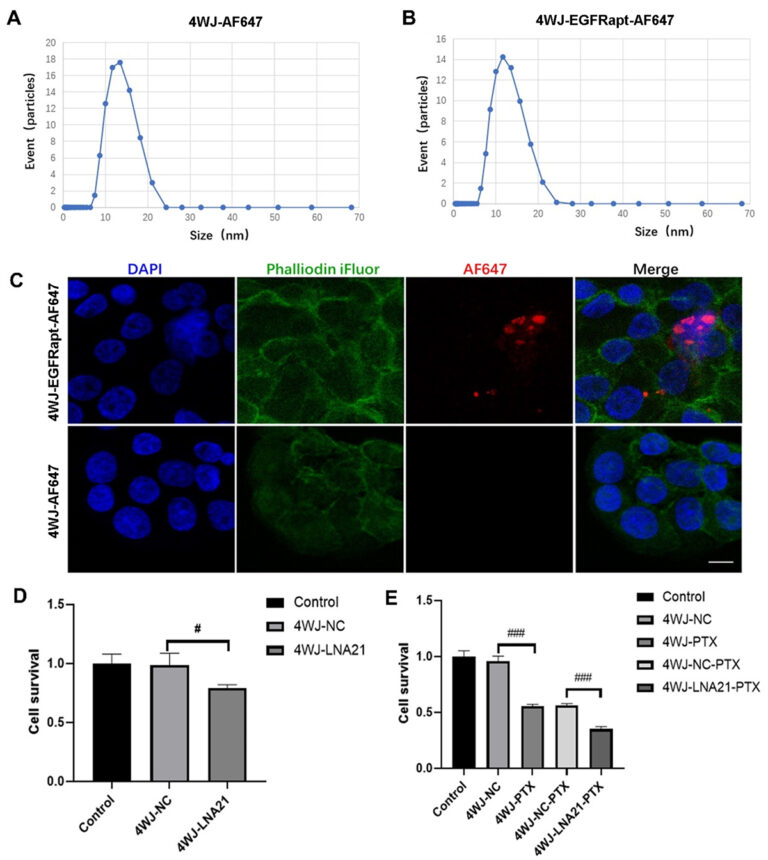
Head and neck squamous cell carcinoma (HNSCC) primarily originate from epithelial tissues, with squamous cell carcinoma accounting for over 90% of cases. While surgery remains primary treatment approach, its outcomes are often unsatisfactory, underscoring the urgent need for innovative biological therapies to improve cure rates and survival. In this study, miRNA-mRNA interaction pairs with potential therapeutic were identified by data mining and bioinformatics techniques, considering miRNA expression profiles, regulatory networks, and target mRNA interactions. Human tongue squamous carcinoma cell line Cal27 was used as cell model, while RNA 4WJ nanoparticles were employed as delivery vehicles to transport drug, nucleic acid aptamers, and therapeutic inhibitor for identified miRNA. Both in vitro and in vivo experiments demonstrated the precise delivery and selective inhibition of Cal27 cells, validated by the targeting and anticancer effects of RNA 4WJ nanoparticles. Additionally, the underlying mechanisms of these therapeutic effects were explored. Collectively, this study provides a novel and promising therapeutic approach with significant potential for clinical application in HNSCC management.